Introduction to Home Viewing Options
When it comes to enhancing your home entertainment experience, the choice between a large television and a projector is a significant one. Both options have their distinct advantages and potential drawbacks that can influence the overall quality of your viewing experience. This article will guide you through the key considerations and differences when deciding between a large TV and a projector.
Advantages of a Large TV
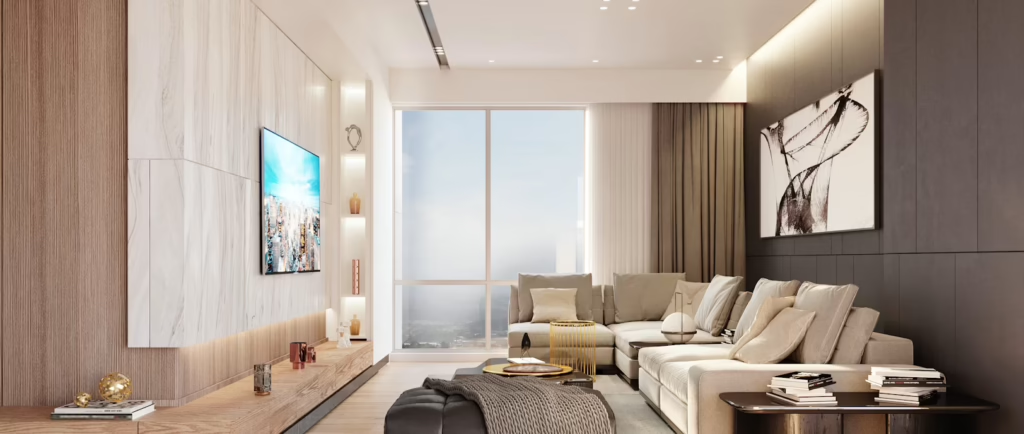
Large TVs have become ubiquitous in homes due to their ease of use, consistent brightness, and superior image quality in well-lit environments. With advancements in technology, large televisions often come equipped with 4K resolution, HDR support, and a wide color gamut. These features can significantly enhance the viewing experience, providing sharper and more vibrant images.
Furthermore, a large TV is designed for straightforward set-up and is user-friendly, with many models being smart TVs that provide easy access to streaming services. Size options vary greatly, with models available that can fit any room’s dimensions while maintaining picture clarity and brightness. Additionally, a large TV typically requires less maintenance than a projector, making it a more practical choice for many households.
Benefits of Choosing a Projector
In contrast, projectors offer a more immersive viewing experience, particularly for those who crave a cinema-like atmosphere at home. By projecting images onto a larger screen or wall, projectors have the potential to create significantly larger visual displays, which is ideal for movie nights or sports events with family and friends.
Moreover, projectors are generally more portable than large TVs, allowing flexibility in adjusting the viewing environment. They can be used in various settings, making them suitable for outdoor events or gatherings. Although setting up a projector can be more complex, the visual payoff can be substantial when the right conditions are met—particularly in darker rooms where projectors can excel.